

[Truth 11 of 12; 21 minute read]
Now, let’s get down to business…
There are approximately 8 billion people in the world today. 85% of these claim a “religion.” The other 15% deny the existence of God altogether. There are over 4300 religions and all believe their religion is the “right” religion. Christianity, Islam, Hinduism Buddhism and Shintoism are the top 5 in numbers. 31.2% proclaim to be Christians. There are 15.2 million Jews, God’s first chosen people. Islam, which began in the 7th century, is the fastest growing religion in the world.
But only one of those 4000+ “gods” and religions believe that Jesus is the only way to salvation; Christianity.
All the others are wrong. There is only one true, living, Creator God.
The “Many” and the “Few.”
“Enter through the narrow gate. For wide is the gate and broad is the road that leads to destruction (eternal separation from God and never ending punishment in Hell), and many enter through it. But small is the gate and narrow the road that leads to life (salvation and eternity in Heaven) and only few find it.” (Matthew 7:13-14).
Only one God’s divine plan of redemption includes restoring His perfect world for eternity.
In fact, the entire massive universe exists only for the exercise of mercy for those who accept Jesus Christ and judgment for those who do not.
Just to be clear, God is not asking you to get into a “religion,” He’s asking you to enter into a relationship with Him called love. It’s a relationship that will set you free. The focus is not on a religion, a denomination, a family tradition or anything else… just His grace through faith in Jesus Christ.
Jesus made it perfectly clear when He said, “I am the way and the truth and the life. No one comes to the Father except through me.” (John 14:6)
When He said “I am the way”… He was saying He is the ONE way, the ONLY way to salvation. Without Him you remain “lost” and condemned.
When He said “I am the Truth”… He was saying He is the divine incarnate Word of God, the deity of God in human form, truly God and truly man, the source of all Truth which is absolute and indisputable.
And when He said “I am the life”… He was saying that because of His death and resurrection and by accepting His grace, you are no longer “dead” in you sins and have been granted eternal life. Jesus died so you could live. Because He lives, your earthly and eternal lives are forever changed the moment accept Him. Jesus said, “I come that they may have and enjoy life, and have it in abundance [to the full, till it overflows”]… abundant life in Christ, both here and for eternity. (John 10:10 AMP; emphasis added)
Salvation means freedom from the penalty of God’s wrath and rightful punishment for sin and it “is found in no one else, for there is no other name under heaven given to mankind by which we must be saved.” (Acts 14:6)
And that name is…
JESUS!
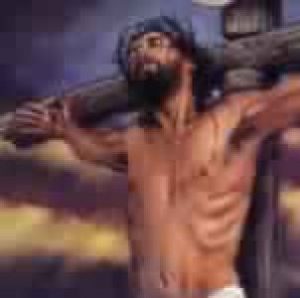
This artwork depicts the greatest expression of love imaginable. There is no love like it. You were born “lost” and you stay lost until you are “found” in Jesus Christ. Salvation comes ONLY by God’s grace through faith in Jesus Christ.
God purposed salvation by His grace through his divine and perfect plan, Jesus accomplished salvation through His death and resurrection and the Holy Spirit applies salvation through your spiritual rebirth.
Salvation is the “new birth” where the Holy Spirit transforms you through a spiritual rebirth where you are no long dead in your sins, but born again for a second time, as a new creation in Christ.
The only way you can become a Christian is to be “born again.”
The Components of Salvation:
Repentance- Faith- Justification– Regeneration- Sanctification- Glorification
Although there is no way we can know for sure, it is generally agreed that whether you are conscious of it or not, in the critical, eternal life-changing moment of salvation – repentance, faith, justification and regeneration, all happen at about the same time, instantaneously, and one is not possible without the others and none are possible without the working of the The Holy Spirit, God’s agent of salvation. Do not be confused or worry about the specifics and the order in which they come, because it’s God who handles it all through His Holy Spirit and all you have to do is just be receptive to His free gift.
As you hear the Gospel, the Good News of Jesus Christ, the Holy Spirit submits “sufficient light” to draw you to Himself, unblinds your eyes, “tugs on” and softens your hardened heart, opens your mind and “convicts you about the guilt of sin, the punishment for it, your need for a Savior and about righteousness and judgment.” (adapted from John 16:8; emphasis added). The Holy Spirit releases you from the bondage of your sin and enables you to come to Christ through genuine repentance and saving faith.
“No one can come to Me unless the Father who sent Me draws him (giving him the desire to Me); and I will raise him up (from the dead) at the last day.” (John 6:44 NKJV; emphasis added)
“But if the Spirit of Him who raised Jesus from the dead dwells in you, He who raised Christ from the dead will also give life to your mortal bodies through His Spirit who dwells in you.” (Romans 8:11 NKJV)
“Nevertheless I (Jesus) tell you the truth. It is to your advantage that I go away; for if I do not go away, the Helper (Comforter, Advocate, Intercessor, Counselor, Strengthener, Standby) will not come to you; but if I depart, I will send Him (the Holy Spirit) to you. And when He has come, He will convict the world (about the guilt) of sin, and of righteousness, and of judgment.” (John 16:7-8 NKJV; emphasis added)
God allows you to see that you are “spiritually” dead in your sin and condemned to the eternal punishment you will receive without a Savior. You must choose to accept His free gift of grace and the Holy Spirit allows that happen.
By accepting God’s grace through repentance and faith in Jesus Christ, you are declared righteous, justified by God on the basis of your faith in what Jesus did for you and then regenerated by the Holy Spirit, where you are completely transformed through a spiritual rebirth, born again for a second time, as a new creation in Christ, indwelled with His Spirit, making you complete and whole with Jesus for the first time and for all time. Your old sinful self is completely gone, “behold everything new.” Your new self is no longer you, but Christ who lives in you. You no longer identify as “who” you are but as “whose” you are in Christ. (adapted from Galatians 2:20)
When you are born again, you are completely changed by the Holy Spirit from the inside-out, for all to see.
“Or do you not know that your body is, the temple of the Holy Spirit who is in you, whom you have from God, and you are not your own? For you were bought at a price; therefore glorify God in your body and in your spirit, which are God’s.” (1 Corinthians 6:19-20 NKJV)
“Do you not know that your body is a temple of the Holy Spirit within you, whom you have from God? You are not your own, for you were bought with a price. So glorify God in your body.” (1 Corinthians 6:19-20 ESV)
Never under-estimate the power of The Holy Spirit because He is God Himself. Wherever you go and whatever you do, whether good or bad, righteous or sinful, God is right there with you through His Spirit. Think about that.
Sanctification
Salvation is the beginning of the new life for the Christian. The first phase of sanctification happens at the moment of salvation, when a believer is spiritually set apart for a special use by God. It is seen as an immediate and definitive act. To be sanctified (the process of being made holy) means that God loves us too much to let us stay the same.
The second phase of sanctification follows and is the “rest of your life-long process” of growing as a Christian by obedience to God through the power of the Holy Spirit. It is the process of changing, growing and becoming more Christ-like every day as evidence and assurance of your faith until God calls you home.
Bring your salvation into full effect by actively pursuing Christlikeness and spiritual maturity. Use serious caution and self-evaluation to avoid anything that might offend God or discredit the name of Christ. (adapted from Philippians 2:12–13 AMP)
You work out what He works in you. Faith in Christ produces good, righteous works. Works are the actions… what you say and how you say it and what you do and how you do it, as you live out how He’s made you new and alive in Christ. You have completely changed for all to see! The standard of your behavior is: “it’s either Christ-like or it’s not and it pleases God or it doesn’t.”
“God’s divine power has given us everything we need for a Godly life through our knowledge of Him who called us by his own glory and goodness. Through these He has given us His very great and precious promises, so that through them you may participate in the divine nature, having escaped the corruption in the world caused by your evil desires.” (2 Peter 1:3-4)
Next Steps for Evidence & Assurance of Your Faith
1. Growing in Christ-like Character
- The fruit of the Spirit is described as love, joy, peace, patience, kindness, goodness, faithfulness, gentleness, and self-control. As you grow in faith, these qualities, the “characteristics of Christ,” become more evident in your daily life. (the specifics on the “Fruit” and scripture reference are in a later section)
- Increasing Holiness: A growing desire to live in a way that pleases God and reflects His holiness. This includes turning away from sinful habits and attitudes and embracing godly behavior.
“But like the Holy One who called you, be holy yourselves in all your conduct [be set apart from the world by your godly character and moral courage]; because it is written, “You shall be holy (set apart), for I am holy.” (1 Peter 1:15-16 AMP)
2. Obedience to God’s Word
- Desire to Obey God: A deepening love for God’s Word and a desire to follow His commands are marks of spiritual growth. As your faith matures, you seek to align your life more closely with Scripture and make decisions that reflect God’s will.
- Application of Scripture: Beyond just knowing Scripture, you begin applying biblical principles to all areas of your life—relationships, work, play, ethics, and personal conduct.
“If you [really] love Me, you will keep and obey My commandments.” (John 14:15 AMP)
3. Conviction of Sin and Repentance
- Sensitivity to Sin: As you grow in faith, you become more sensitive to sin in your life. The Holy Spirit convicts you of thoughts, attitudes or actions that are not “Christ-like or pleasing to God”, leading to genuine repentance.
- Ongoing Repentance: Sanctification involves regularly confessing and turning away from sin as you become more aware of areas where you fall short and seek God’s help to overcome them.
“If we [freely] admit that we have sinned and confess our sins, He is faithful and just [true to His own nature and promises], and will forgive our sins and cleanse us continually from all unrighteousness [our wrongdoing, everything not in conformity with His will and purpose].” (1 John 1:9 AMP)
4. Perseverance and Endurance
- Steadfastness in Trials: A growing faith is tested and refined through trials and challenges. Over time, you develop perseverance and endurance, trusting God more deeply through difficulties.
“Consider it nothing but joy, my brothers and sisters, whenever you fall into various trials. Be assured that the testing of your faith [through experience] produces endurance [leading to spiritual maturity, and inner peace]. And let endurance have its perfect result and do a thorough work, so that you may be perfect and completely developed [in your faith], lacking in nothing.” (James 1:2-4 AMP)
- Hope and Joy in Suffering: Sanctification produces a sense of hope and even joy during hardships, knowing that God is using trials to refine your faith and develop Christlike character.
“And not only this, but [with joy] let us exult in our sufferings and rejoice in our hardships, knowing that hardship (distress, pressure, trouble) produces patient endurance; and patient endurance produces, proven character (spiritual maturity); and proven character produces hope and confident assurance [of eternal salvation]. Such hope [in God’s promises] never disappoints us, because God’s love has been abundantly poured out within our hearts through the Holy Spirit who was given to us.” (Romans 3:3-5 AMP)
5. Increasing Love for God and Others
- Love for God: There is a deeper love for God, expressed through worship, prayer, and a desire to spend time in His presence. Your faith is evidenced by your growing passion for God and your gratitude for His grace.
“And Jesus replied to him, ‘You shall love the Lord your God with all your heart, and with all your soul, and with all your mind.'” (Matthew 22:37 AMP)
- Love for Others: Spiritual maturity also manifests in how you treat others. A growing capacity to love and serve others, even sacrificially, reflects the love of Christ within you (John 13:34-35).
“I am giving you a new commandment, that you love one another. Just as I have loved you, so you too are to love one another. By this everyone will know that you are My disciples, if you have love and unselfish concern for one another.” (John 13:34-35 AMP)
6. Desire for Spiritual Growth and Discipleship
- Hunger for God’s Word: As you progress in sanctification, you develop a deeper hunger to know God more and grow in your faith. This may involve more regular Bible study, prayer, and seeking fellowship with other believers.
“…like newborn babies [you should] long for the pure milk of the word, so that by it you may be nurtured and grow in respect to salvation [its ultimate fulfillment]. (1 Peter 2:2 AMP)
- Seeking Discipleship and Mentorship: You might seek out discipleship relationships, mentors, or spiritual accountability, as you desire to grow in your walk with God.
7. Humility and Dependence on God
- Recognizing Your Need for Grace: Sanctification brings an increasing awareness of your weaknesses and your need for God’s grace. You grow in humility, knowing that apart from Christ, you can do nothing.
“I am the Vine; you are the branches. The one who remains in Me and I in him bears much fruit, for [otherwise] apart from Me [that is, cut off from vital union with Me] you can do nothing.” (John 15:5 AMP) .
“But I say, walk habitually in the [Holy] Spirit [seek Him and be responsive to His guidance], and then you will certainly not carry out the desire of the sinful nature [which responds impulsively without regard for God and His precepts].” (Galatians 5:16 AMP)
8. Desire to Share the Gospel and Serve
- Evangelism: A natural outflow of sanctification is a desire to share the good news of Jesus with others. As your faith deepens, you become more motivated to tell others about the hope you have in Christ.
“Go therefore and make disciples of all the nations [help the people to learn of Me, believe in Me, and obey My words], baptizing them in the name of the Father and of the Son and of the Holy Spirit, teaching them to observe everything that I have commanded you; and lo, I am with you always [remaining with you perpetually—regardless of circumstance, and on every occasion], even to the end of the age.” (Matthew 28:19-20 AMP)
- Service and Ministry: You seek ways to serve others, whether within the church or in your community, as a reflection of Christ’s servant heart. You increasingly see opportunities to minister and help those in need.
“For even the Son of Man did not come to be served, but to serve, and to give His life as a ransom for many.” (Mark 10:45 AMP)
9. Humility and Teachability
- Willingness to Learn: You become teachable and open to correction, both from Scripture and from others in the faith. Humility, the state of being humble, which means free from pride or arrogance, is a key characteristic of someone growing in Christ.
“Give instruction to a wise man and he will become even wiser; Teach a righteous man and he will increase his learning.” (Proverbs 9:9 AMP)
- Acknowledging Imperfections and Need for Growth: You begin to recognize that growth is a process, and you acknowledge areas of weakness or where further growth is needed.
The Seven Qualities of the New Christian
Scripture teaches that there are the “Seven Qualities” (fruit) we are instructed to add to our faith after we become a Christian, a born-again believer in Jesus Christ: (adapted from 2 Peter 1:5-7 ERV with notes added)
If all these things are in you and growing, you will never fail to be useful to God. You will produce the kind of fruit (thoughts, attitudes and actions) that should come from your knowledge of your Lord Jesus Christ and your faith in Him.
“Because of all your blessings,”be diligent” and make every effort to add these things to your life:
–To your faith (belief, complete confidence, and trust in who Christ is and what He has done for you through His death and resurrection) add goodness (virtue, moral excellence, the nature of God);
-To your goodness add knowledge (insight & understanding, by reading God’s Word every day, without exception; wisdom is the timely application of knowledge, discerning how to act and react in all situations.);
-To your knowledge add self-control (discipline, doing things the way the are supposed to be done; doing all the right things the right way; restraint, saying and doing what you should say and do and not saying and doing what you should not say and do);
-To your self-control add patience (a good attitude when waiting; steadfast and calm despite opposition, difficulty, adversity or inconvenience);
-To your patience add godliness (simply put, it’s living a fruitful and obedient Christian life, devotion to God; a relationship to Him that drives a different behavior from the inside-out, Christ-like character reflected in your thoughts, attitudes & actions… how you think, what you say and how you say it and what you do), all which should be Christ-like and pleasing to God;
-To your godliness add kindness (friendly and forgiving; brotherly affection toward whoever crosses your path, especially your brothers and sisters in Christ).
-And to this kindness add [Christian] love (Love is a virtue grounded in the nature of God; characterized by deep affection and adoration. It means serving God and others by unselfishly seeking what is best for them and to do things for their benefit.”
Commit this to memory: To your faith add goodness; to your goodness add knowledge; to your knowledge add self-control; to your self-control add patience; to your patience add godliness; to your godliness add kindness and to this kindness add love.
“God called you and chose you to be His. Do your best to live in a way that shows you really are God’s called and chosen people. If you do all this, you will never fall.” (2 Peter 1:10)
The Fruit of the Spirit
Also as part of the sanctification process of spiritual maturity, the Holy Spirit empowers believers to live a life that reflects the character of Jesus Christ. This includes producing spiritual fruit (actions; characteristics), such as love, joy, peace, patience, kindness, goodness, faithfulness, gentleness, and self-control. Christlikeness. (Commit the fruit to memory and live them out). You reap what you sow.
“But the fruit of the Spirit [the result of His presence within us] is love [unselfish concern for others], joy, [inner] peace, patience [not the ability to wait, but how we act while waiting], kindness, goodness, faithfulness, gentleness, self-control. Against such things there is no law.” (Galatians 5:22-23 AMP)
Here are some simple definitions of “the fruit of the Spirit.”
Love is a virtue grounded in the nature of God; characterized by deep affection and adoration. It means serving God and others by unselfishly seeking what is best for them and to do things for their benefit. (also one of the Seven Qualities)
Joy is the ongoing happiness that flows from your heart and is not determined by ever- changing external circumstances. (also one of the Seven Qualities)
Peace is freedom from internal and external distress (negative stress); anxiety, fear, doubt, pressure, for example.
Patience – Steadfast and calm despite opposition, difficulty, adversity or inconvenience; a good attitude when waiting. (also one of the Seven Qualities)
Kindness– Friendly and forgiving toward your brothers and sisters in Christ. (also one of the Seven Qualities)
Goodness means being helpful, constructive and productive. It’s morally excellent. It’s positive and desirable in nature. Goodness is the nature of God. God is good all the time and through faith in Him we can also be good and good just doesn’t get any better than that. Bad is the opposite of good. Bad is never good. “Goodness is the energy which drives us forward.” (also one of the Seven Qualities)
Faithfulness is the act of being true to your word and commitments, as to what you have promised to be and do.
Gentleness is a mild, kind, or tender temperament.
Self-Control means restraint which requires discipline, which is doing things the way they are supposed to be done; doing the rights things in the right way. (also one of the Seven Qualities)
Be able to give a simple definition of each and then live them out daily, calling on a specific fruit that is useful in any particular situation that occurs throughout the day.
“Do everything without complaining or questioning the providence of God, so that you may prove yourselves to be blameless and without deception, innocent and uncontaminated, children of God without blemish in the midst of a morally crooked and spiritually perverted generation, among whom you are seen as bright lights in the world of darkness, holding out and offering to everyone the Word of life.” (adapted from Philippians 2:14-16 AMP).
In everything you say and do, let others see Christ in you and always be ready to give an answer to everyone who asks you to explain about your new attitude and how you have changed and the hope you have, but answer them with gentleness and respect, just as Christ would do. (Adapted from 1 Peter 3:15)
“And never be ashamed of the gospel, for it is the power of God for salvation to you and everyone who believes in Christ as Savior and Lord.” (Adapted from Romans 1:16; emphasis added)
 theattituderules.com